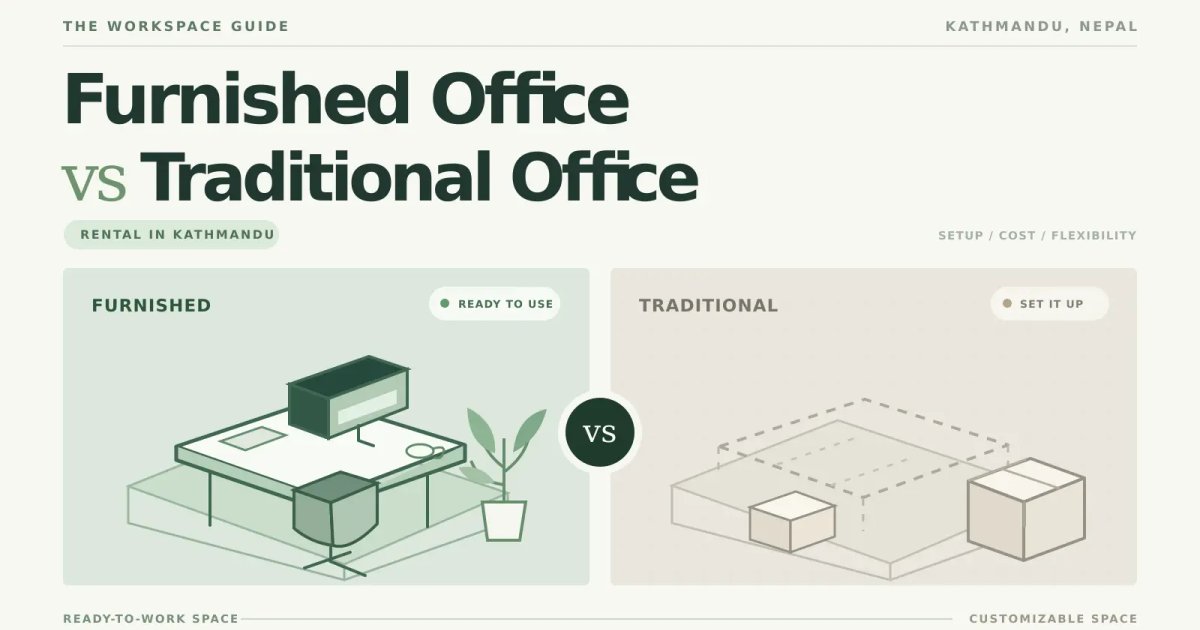
A furnished office comes with desks, chairs, internet and basic facilities; a typical office rental requires tenants to arrange these things themselves. In Kathmandu, both are available, but differ in set-up costs, monthly costs, facilities, rental flexibility and maintenance duties.
Usually, a ready-to-use office is ideal for companies that want to move in and start working without having to spend too much on office furniture and setup. In contrast, traditional office rentals give companies more flexibility to arrange their space as they need it. But it also means more time and money spent getting the office ready.
The choice between the two depends on your budget, team size, rental period, and business needs. Knowing the differences can help you decide what kind of office is best for your business.
Difference Between Office Rental and Furnished Office Rental
The main difference between a furnished office and a traditional office rental is that a furnished office is ready for use, while a traditional office requires you to purchase furniture, internet, and other basic facilities before you can start working.
Features
Furnished Office Rental
Traditional Office Rental
Office condition
Ready to move in and work
Usually empty or partially furnished
Furniture
Desks, chairs and workstations already provided
Tenants arrange their own furniture
Internet
Usually available
Tenants may need to arrange a connection
Cleaning
Often managed by the office provider
Usually managed by tenants
Meeting rooms
Shared meeting rooms may be available
Tenants may need to set up their own
Office setup
No preparation required
Furniture and basic facilities must be arranged
Customization
Limited changes to the existing setup
More freedom to arrange the office
Rental period
Daily, weekly or monthly options may be available
Usually longer rental agreements
If you want to start working without spending much time on setup, a furnished office is your best bet. On the other hand, a traditional office gives you more control over your workspace but it needs more preparation and cost. The right choice depends on your budget, team size, rental period and business requirements.
Furniture and Office Layout
Furnished offices come with desks, chairs and workstations ready to be used, while traditional offices require tenants to buy and arrange their own furniture.
Setting up a conventional office means buying desks, chairs, filing cabinets and other equipment. You may also have to arrange for furniture delivery, installation and office layout. This can take a long time, especially if you need to prepare a work area for a large group.
A furnished office cuts down most of this work as the basic furniture is already set up. Businesses can come in with their laptops, documents, and personal equipment and start working from the first hour.
Office Together, for example, has a big working space with 9 cubicle desks. We also have furnished meeting rooms and separate cabins for client meetings. These spaces are ready to move into without the need to furnish the basics. However, businesses that want their own furniture designs, specific desk arrangements or a custom office layout are better off with traditional offices.
Initial Costs and Ongoing Expenses
Furnished offices don’t need too much upfront cost to set up. But for traditional offices, you need to spend on furniture, internet and other basic facilities.
A furnished office may have a higher rent per month, as it includes furniture and some services. The base rent might be lower for conventional offices, but tenants must take into account the extra costs of establishing and operating the workspace.
The primary cost differences are:
Furniture costs: Furnished offices come with basic desks and chairs. In a traditional office, tenants usually buy their own furniture.
Internet setup: Offices that are furnished will often have an internet connection ready to use. In traditional offices, the new connection might be installed and paid for by the tenant.
Electricity and utilities: Separate electricity charges may apply for both types of offices. Billing is by provider and rental agreement.
Cleaning and maintenance: Usual cleaning and basic maintenance are handled by furnished office providers. Traditional office tenants may have to hire a cleaning crew or make arrangements on their own for such services.
Security deposits and rent. You may have to pay rent or a security deposit in advance for either type of office. The amount depends on the property and terms of the rental.
For example, a business may find it better to rent a regular office with lower monthly rent but spend a lot on furniture before moving in. A furnished office might be more expensive each month, but you may not need to spend much on the initial setup. So the cheaper option is not always the one with the lower monthly rent. Look at total costs over the time you plan to use the office.
Internet, electricity and other utilities
Most furnished offices include internet, power, and air conditioning, but traditional office tenants have to sort out some of these facilities themselves. But in traditional offices, the company has to install its own Internet connection and pay the utilities. Depending on what the landlord provides, they may also have to install AC or other equipment.
Office Together offers high-speed Wi-Fi throughout the workspace, electrical outlets, and central air conditioning. Electricity costs are based on how long the rental is for:
Daily and weekly rentals: normal use of laptops and charging of mobile phones generally does not have any additional electricity costs.
Monthly rent: Each private office has its own electricity meter, and tenants pay based on their electricity usage.
Wired Internet: Tenants who require a wired connection on a monthly basis can request this at an additional setup cost.
This makes furnished offices a convenient option for businesses that want to operate without having to arrange for every basic facility themselves.
But not all furnished offices come with unlimited electricity, internet, or other utilities included in the rent. Be sure to check the billing conditions before you decide on an office.
Shared Facilities and Meeting Rooms
Furnished offices often come with shared meeting rooms, kitchens and other common facilities, whereas tenants in traditional offices will have to organize these themselves.
Meeting rooms are a fantastic space for conducting client discussions, interviews, presentations, training and team meetings. In a traditional office environment, businesses might have to allocate a section of their leased premises for a conference room and acquire the necessary furnishings and equipment.
Many serviced office providers have meeting rooms available which tenants can book when they need them.
At Office Together we have several meeting facilities:
Main meeting hall: Large room with a long meeting table, ten chairs and a smart touchscreen TV for presentations meetings and classes.
Three smaller meeting rooms: Ideal for team discussions, interviews and smaller meetings.
Private meeting cabins: Individual meeting rooms for client meetings and more private discussions.
Shared kitchen: There is a common kitchen and a fridge for food and drink.
Restrooms: Two shared bathrooms with basic toiletries and tissue.
Meeting rooms are available on a first-come, first-served basis. The main meeting hall is more expensive, given its additional facilities and higher demand.
Shared facilities can reduce the need for businesses to establish each room or service separately. However, some facilities may have additional charges, booking rules or restrictions on use.
Cleaning, Maintenance and Reception Services
Furnished offices may come with cleaning, basic maintenance and reception services, but in a traditional office, businesses may need to hire cleaners, buy cleaning materials or book maintenance services separately. This adds more responsibilities and costs to daily office operations.
Many offices already have people on the staff whose job it is to keep the office clean and to help visitors. For instance, the Office Together cleaning crew comes in and cleans the office each morning, on operating days. This includes desks, floors, windows, conference rooms, restrooms and common areas. However, tenants are still required to remove their rubbish and keep their work areas clean.
We also have a shared reception desk and receptionist to welcome visitors and to help with general inquiries. Reception, cleaning and maintenance services are available during their respective staffed hours, and not all night.
This allows companies to focus on their core business rather than having to manage all the aspects of the office on their own.
Lease Term and Flexibility
Traditional office rentals require longer contracts, while furnished offices typically have daily, weekly and monthly options. Flexibility of rental terms is important for businesses that do not need a permanent office or are unsure of the length of time they will need a particular space.
Traditional offices are typically rented for longer periods as tenants have to pay to install furniture, internet and other facilities. If you've already spent cash on setting up the office, then moving out after a short while might not be realistic.
Furnished offices make it easier for temporary projects, visiting teams, startups, and companies that require a workspace for a limited period of time.
Office Together offers a choice of rental options:
Day Rate: For businesses or individuals requiring a work space for a day.
Rental per week: Great for short projects, visiting teams and temporary office needs.
Monthly rental: For companies that need a regular workspace without the need to invest in furniture and set up.
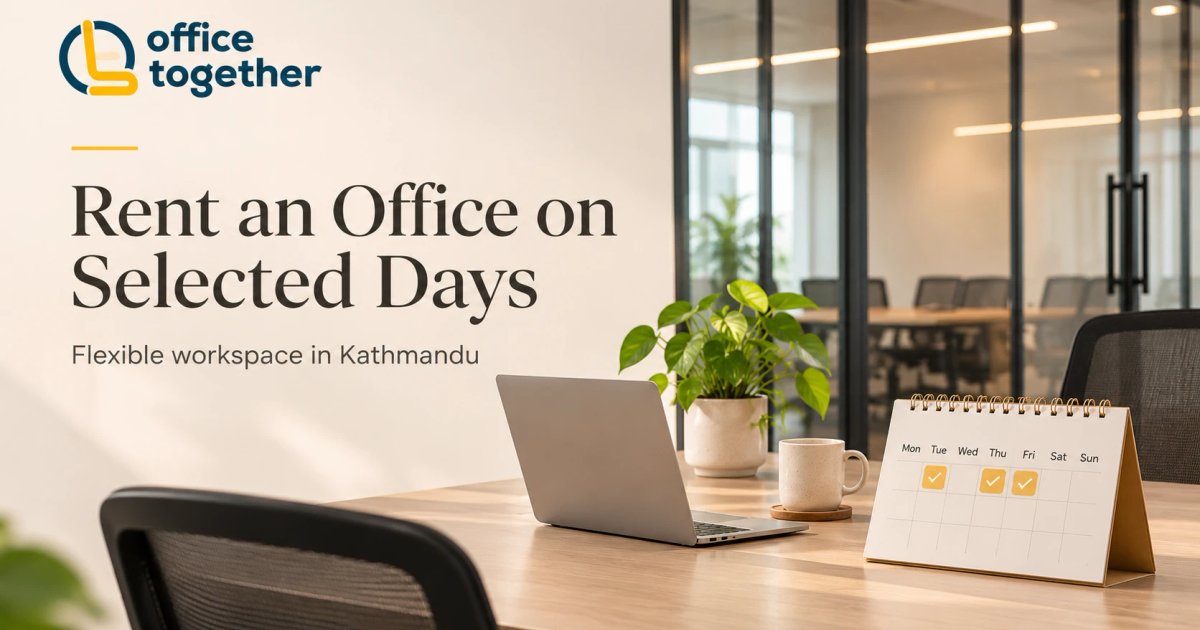
Daily rental: For businesses that need an office only on specific days of the week.
Flexibility means that companies can choose an office according to what they actually need. However, rental periods and conditions differ between providers. Some furnished offices may also require longer commitments, and some traditional offices may offer shorter agreements.
Privacy and Office Personalization
Traditional office rentals give you more flexibility to customize the workspace. On the other hand, furnished offices are ready to go with everything set up and come with shared amenities.
Typically, in a traditional office, businesses can arrange their desks, chairs, meeting areas and other furniture to their needs. They can also change the interior design, install branding, or create separate rooms with the landlord’s permission. This is advantageous for businesses that want a certain office design or require a workspace constructed around the business.
Furnished offices have the furniture and facilities set up. This reduces setup time, but doesn't always allow for major changes. When you rent a furnished office, however, you don’t have to share your actual workspace with other businesses. Some providers also offer private office rooms alongside shared meeting halls, kitchens and reception areas.
Office Together has private office options, separate meeting cabins and a large working space with cubicle style workstations. An arrangement can be chosen according to the company's team size and privacy requirements.
Privacy is possible in both types of offices. The big distinction is the freedom tenants have to change the workspace.
Furnished vs. Traditional Office Rental: Which Is Better?
A furnished office is better for businesses that need an immediate workspace with flexible rental options, whereas a traditional office suits companies that wish to organize and manage their own workplace. The right choice varies depending on your budget, team size, rental duration and future plans.
When to Choose a Furnished Office?
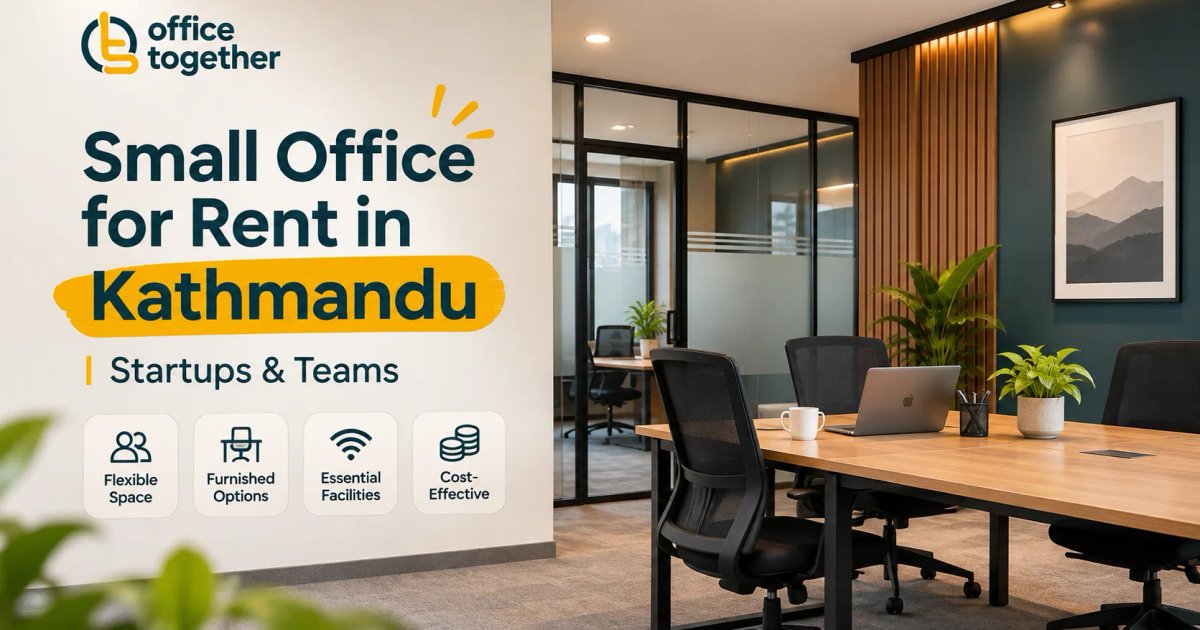
If you run a startup, have a small team, or are a business trying to save time and money on office setup, a furnished office is your best option without a doubt.
Startups: New companies that want to cut down on furniture costs and get to work without spending a lot up front.
Small Teams: Companies that need a working space, desks, chairs, internet and other basic amenities.
Short term projects: Companies that need office space for a few days, weeks, or months.
Visiting Teams : Professionals visiting Kathmandu for a short duration and looking for a ready-to-use office.
Expanding businesses: Businesses that need flexible office space before moving into larger or permanent office space.
Basically, furnished offices are great if you need a professional working area, but not the costs of setting it up and running it on your own.
When to Choose a Traditional Office and Furnish It Yourself?
Established businesses need a long-term workspace and more control over it. Similarly, business owners who have a clear idea of what type of furniture and aesthetics they want are better off setting up their own office.
Established companies: Businesses that expect to be at the same location for many years.
Large teams: Companies that need more space and want to organize different work areas themselves.
Specialized workplaces: Companies that want unique furniture, configurations, interiors or branding.
Long-term operation: Companies that are prepared to invest in furniture and manage their own premises.
Special needs businesses: Businesses that require equipment, layouts or working arrangements not found in standard furnished offices.
A traditional office gives businesses greater control. But they demand more planning, setup time, budget, and regular management.
Things to Check Before You Choose an Office Rental in Kathmandu
Before making a decision between the furnished office and the traditional one, you need to compare the total rental cost, the facilities available, location, rental conditions and your business requirements.
Here are the main things to look at:
Overall cost: Total up monthly rent, furniture expense, electricity bills, internet setup, cleaning and other cost.
Team size: Ensure that your office has enough desks and working space for all of your employees.
Location: Select an office location that is easy for employees and clients to reach. Consider road access, public transport and nearby facilities.
Rental duration: Find out whether the office can be rented on a daily, weekly, monthly or longer basis.
Amenities: Seek out internet, conference rooms, restrooms, parking and communal areas.
Office access: Discover when tenants can enter and use the office if your business operates outside regular working hours.
Maintenance and Reception: See if these services are included and when the staff is available.
Future needs: Think about whether the office can accommodate your business if your team grows.
Also, it is a good idea to visit the office before signing a rental agreement. This gives you an idea of the real space, the available furniture, facilities and the working environment.
Find the Best Furnished Office Space in Kathmandu
There are pros and cons to both furnished and traditional office leases. The traditional method offers more flexibility in setting up the workspace itself, though the time and cost investment are high. A furnished office saves time in setting up and also provides the necessary facilities needed from the beginning itself, though you get zero control over furniture setup.
Office Together offers you fully furnished office space on rent in Kathmandu with ready to use work stations, high speed Wi-Fi, meeting rooms, shared kitchen, reception services and free underground parking. We offer daily, weekly, selected-day and monthly rental choices so businesses can have a workspace that suits their needs.
Check out our furnished office for rent in Kathmandu or get in touch with Office Together to help you find the best workspace for your business. If you’re thinking of moving your office to the Baneshwor, Anamnagar, or Putalisadak areas, Office Together is the best place for you.
Frequently Asked Questions
Is a furnished office more affordable than the traditional office?
A furnished office has no setup costs because desks, chairs and basic facilities are already provided. However, the rent per month may be higher. Rent may be cheaper for a traditional office space, but furniture, internet and maintenance are more expensive. The cheaper option depends on how long you are renting and your total costs.
What is the biggest advantage of renting a furnished office?
The best thing about a furnished office is that you can start working right away without buying the furniture or doing the basic arrangement. Many furnished offices also provide internet, cleaning and shared facilities, which reduces the amount of work required to manage an office.
Do furnished offices have internet and electricity?
Yes, most furnished offices provide electricity and internet, but the charges depend on your rental agreement. High-speed Wi-Fi is available throughout the workspace at Office Together. The monthly offices have separate electricity meters, and daily or weekly renters do not pay extra for basic laptop and phone charging.
Can you customize a furnished office?
Some furnished offices only permit minor changes to the furniture arrangements. Any major customization requires the provider’s permission. In general, traditional offices offer full flexibility in terms of furniture selection and interior re-arrangements within the limits of the rental agreement.
Is a furnished office right for a small business?
Yes, furnished offices are perfect for a lot of small businesses because they lower the costs of setting up and provide ready-made workspaces. Startups, consultants, freelancers, and small teams can have access to essential office facilities without buying furniture and negotiating each service individually.
Is it possible to rent an office in Kathmandu for just 1 day?
Yes, Office Together offers daily, weekly, selected days and monthly rental options, depending on workspace availability. This is suitable for short-term projects, visiting professionals and businesses that do not need a permanent office.