A serviced office is a ready-to-use workspace that usually comes with furniture, internet and professionally managed facilities. Businesses can rent a private office without arranging everything from scratch. The provider generally handles building maintenance and common facilities so that companies can focus on their daily work.
Unlike a traditional office rental, a serviced office means you do not have to buy furniture, set up basic utilities or manage shared building services yourself. It suits startups, small businesses, consultants and companies that need an office for a limited time. What is included and the rental terms depend on the provider.
This guide explains how serviced offices work, what facilities they offer, their benefits and limits, rental costs and what to consider before you book.
What Is a Serviced Office?
A serviced office is a furnished, managed workspace that businesses can rent for their daily operations. It typically has desks, chairs, internet and other essential office facilities. The provider manages the premises and may offer extras like cleaning, reception, maintenance and access to meeting rooms. Depending on room sizes, serviced offices can fit individuals, small teams and larger companies.
The main purpose of a serviced office is to cut down the work of setting up and running a workplace. Instead of leasing an empty commercial property and arranging every facility separately, a business can move into an office where much of the basic setup is already done. A furnished room is not automatically a fully serviced office, though. The provider must also offer management or support services, so confirm which ones are included in the rent.
How Does a Serviced Office Work?
A serviced office works through a rental agreement between a business and a workspace provider. The business picks an available office, reviews its facilities, chooses a rental period and confirms the booking. Once the arrangements are done, employees can start working in the furnished space.
Step 1: Choose an Office Based on Your Team Size
First, pick an office that comfortably fits your employees. A small business with two people may need only a compact private room, while a growing team may need several workstations and space to collaborate. Think about how many employees work on site, how the desks are arranged, storage and room to move around. The right room size helps you avoid paying for space you do not need.
Step 2: Review the Available Facilities and Services
Before you choose an office, check which facilities come with the room. These may include desks, chairs, Wi-Fi, electricity, cleaning, reception, meeting rooms, kitchen access and parking. Some services may be in the base rent, while others cost extra. Reviewing the facilities tells you whether the office suits your work and your budget.
Step 3: Select the Rental Period
Serviced offices may offer daily, weekly, monthly or longer rentals, depending on the provider. Some also let you book an office for specific dates. Pick a period based on how often your employees need to work on site. A temporary project team may need an office for one week, for example, while a company with regular staff may prefer a monthly rental.
Step 4: Confirm the Booking and Payment Terms
After you choose an office and a rental period, review the quote and the booking terms. Check the base rent, extra service charges, payment schedule, security deposit, cancellation policy and office access hours. Some providers ask for advance payment or a reservation fee before they confirm the space. Knowing these terms helps you avoid surprise costs and disagreements later.
Step 5: Move In and Start Working
Once the booking is confirmed and the office is ready, your employees can start using the space on the agreed schedule. A furnished serviced office usually needs less preparation, because desks, chairs and basic infrastructure are already there. You may still need to bring computers, documents and other equipment for your work. Talk to the provider beforehand about any extra internet connections or equipment installation.
What Facilities and Services Are Included in a Serviced Office?
Serviced offices commonly provide furnished workstations, internet access and managed building facilities. Depending on the provider, companies may also use meeting rooms, reception services, kitchens, bathrooms and parking areas. What is included varies, so check before you rent.
Furnished Desks and Workstations
Most serviced offices provide basic furniture like desks, chairs and workstations. Some also offer storage cabinets, partitions or other office equipment. Having furniture ready means you do not have to buy and arrange it yourself. The layout and equipment can differ between rooms, so inspect the workspace before you book.
Internet, Electricity and Other Utilities
Serviced offices generally give you access to electricity and internet, but how you pay for them can differ. Some providers include these costs in the rent, while others charge separately based on usage or an agreed rate. Also check how reliable the internet is, how many electrical outlets there are and whether there is backup power. These matter most for companies that depend on computers, online meetings and digital services.
Meeting and Conference Rooms
Many serviced offices have meeting rooms that companies can use for client talks, presentations, interviews and internal meetings. This lets a business rent a smaller private office without keeping its own conference room. Meeting rooms may have tables, chairs, screens and presentation equipment. You may need to book in advance, and some providers charge extra based on room size or time used.
Reception, Cleaning and Maintenance
Reception, cleaning and maintenance services help businesses handle everyday office tasks without hiring separate staff for each one. Reception staff may greet visitors and direct clients, while cleaners look after common areas and workspaces on the provider’s schedule. The property operator may also handle building maintenance. Confirm which services are available, when they run and whether they cost extra.
Shared Kitchen, Bathrooms and Common Areas
Serviced offices often have common facilities that companies share with other businesses in the building. These may include kitchens, drinking water, bathrooms and waiting areas. Shared facilities mean you do not have to build separate spaces inside your private office. Before you rent, check how clean, accessible and well-run these areas are.
Parking, Security and Building Access
Parking, security and building access matter when you rent a serviced office. Some properties offer parking for motorcycles and cars, while others have limited spaces or extra charges. Building security may include staff, CCTV or controlled entry. Also confirm the operating hours, because not every serviced office allows access all day and night.
What Are the Benefits of Renting a Serviced Office?
The main benefits of renting a serviced office are lower setup needs, managed facilities and possibly flexible rental terms. These help a business set up a working location without taking on every part of office management.
Lower Initial Office Setup Expenses
A serviced office can cut setup costs because essential furniture and facilities are usually already there. You may not need to buy desks, chairs and partitions or arrange basic building services yourself. This helps startups with small starting budgets. How much you save depends on the rent, what is included and how long you plan to use the office.
Faster Office Setup
You can often start working sooner in a serviced office because the basic workplace is already arranged. A traditional office may need furniture installed, internet set up and cleaning arranged before employees can move in. A ready-to-use office cuts these tasks, so your team can get on with its work. The real move-in time depends on room availability, booking confirmation and any extra requirements.
Reduced Office Management Responsibilities
Serviced offices can reduce the time businesses spend on cleaning, building maintenance, reception and shared facilities. The provider usually handles these tasks partly or fully, depending on the rental agreement. That helps small companies with no dedicated admin or facility staff. You are still responsible for your own equipment, employees and activities in the office.
Flexible Rental Arrangements
Some serviced office providers offer flexible rental periods, so you can pick space to match your working schedule. Short-term rentals help temporary projects, visiting teams and businesses testing a new location. Monthly options may suit companies that need a regular workplace. They can also help you avoid a long-term lease when your future space needs are unclear.
Access to Professional Business Facilities
Serviced offices may give you access to meeting rooms, reception support, internet, parking and other facilities that a small business might otherwise have to arrange on its own. A consulting firm, for example, may use a private office for daily work and book a larger meeting room when clients visit. This lets you use extra facilities when you need them without renting a bigger private office.
What Are the Limitations of a Serviced Office?
Serviced offices are convenient, but they can also limit customization, facility access and rental terms. Understand these limits before you decide whether the arrangement suits your daily work.
Limited Office Customization
Serviced offices generally come with existing furniture and room layouts, so companies have less freedom to change the space. Installing permanent partitions, changing the layout, adding signage or making structural changes may need the provider’s approval. If you have specific design needs, confirm which changes are allowed before you sign.
Additional Charges for Certain Services
Not every facility in a serviced office is included in the base rent. Electricity, meeting room bookings, parking, printing and extra equipment may cost more. These can raise your total monthly cost, especially if you use extra services often. Ask for an itemized quote so you know everything you will pay.
Shared Facility Availability
Some facilities in serviced offices are shared between several businesses. Meeting rooms, kitchens, waiting areas and parking spaces may depend on availability or have usage rules. A meeting room may need to be reserved ahead, and parking may be tight at busy times. Understand these arrangements before you count on shared facilities for regular work.
Restrictions on Access and Rental Terms
Serviced offices may have set working hours, booking conditions, minimum rental periods and cancellation policies. Some buildings allow extended access, while others run only during fixed business hours. If your team works late, works across time zones or needs weekend access, check these limits carefully. Also review the renewal terms and any changes to rental charges.
How Much Does a Serviced Office Cost?
The cost of a serviced office depends on its location, room size, number of workstations, furniture, facilities and rental length. Some providers charge a fixed amount for a private room, while others price by the day, week or month. Offices in different buildings can also cost different amounts because of access, facilities and property conditions. So no single price applies to every serviced office.
Cost component
What businesses should check
Base office rent
Room size, seating capacity and rental period
Office furniture
Included items or additional equipment charges
Internet
Included connection or separate charges
Electricity
Included in rent or billed according to usage
Cleaning and maintenance
Included services and additional fees
Meeting rooms
Included access or paid bookings
Parking
Availability and applicable charges
Security deposit
Required amount and refund conditions
Other services
Additional facilities or equipment costs
Compare the total running cost and do not choose an office only by its advertised rent. Include recurring charges in your monthly costs, and treat refundable deposits and one-time setup costs separately. A furnished serviced office may have a higher base rent than an empty commercial room, but it can cut the upfront investment needed to get the workplace ready.
Who Should Consider Renting a Serviced Office?
Serviced offices suit businesses that want a ready-to-use workplace without arranging furniture, building maintenance and other basic services themselves. They can support different working styles, from regular office attendance to temporary projects.
Startups and Small Businesses
Startups and small businesses benefit because a serviced office cuts the need to spend on furniture and basic setup. A small team can choose a private room that fits its current headcount and needs. This can help control early costs while still giving access to shared facilities. If you expect to grow, ask whether more workstations or a larger room may become available.
IT Companies and Digital Agencies
IT companies and digital agencies often need reliable internet, dedicated workstations, electricity and room for the team to collaborate. A furnished serviced office can cover these basics without the company setting up a whole office itself. If you use specialized networks, multiple monitors or servers, confirm that the workspace supports your technical needs.
Consultants and Professional Service Providers
Consultants, accounting firms, agencies and other professional service providers may need private areas for client calls, document work and regular meetings. A serviced office can give them a dedicated room with access to shared meeting facilities where available. This works for small firms that want privacy and a steady workplace but do not need a large commercial office.
Remote and Hybrid Teams
Remote and hybrid teams may need a physical office only on certain days for collaboration, meetings or project work. A flexible serviced office can give them a private room for those periods without a permanent workspace all month. A remote team may rent an office for planning sessions or a weekly check-in, for example. The best arrangement depends on how often the team attends, booking availability and rental terms.
Businesses Opening a Temporary Office
Businesses may need temporary office space for short-term projects, for sending employees to another city or for testing operations in a new place. A serviced office gives you a furnished workplace for a limited time without a full setup. Compare rental terms, room capacity and the services you need before you pick a temporary office.
Serviced Office vs Traditional Office: What Is the Difference?
The main difference between a serviced office and a traditional office is how much setup and management the tenant has to handle. A serviced office usually comes furnished with managed facilities, while a traditional commercial office often means the business arranges furniture, internet, maintenance and other services itself. Some traditional office agreements do include certain building services, depending on the landlord.
Features
Serviced office
Traditional office
Furniture
Usually provided
Often arranged by tenant
Office setup
Basic setup generally ready
May require additional preparation
Internet and utilities
Provider managed or separately billed
Usually arranged by tenant
Maintenance
Often managed by provider
Depends on rental agreement
Meeting facilities
May be shared or bookable
Usually arranged by tenant
Rental duration
May offer flexible periods
Often longer commitments
Customization
Subject to provider policies
Depends on lease permissions
Office management
Fewer responsibilities for companies
More responsibilities for companies
A serviced office works well for businesses that want a ready-to-use workplace with fewer setup duties. A traditional office may suit companies that want more control over their interior and plan to stay in the property for a long time. The better choice depends on rental costs, setup needs, how much you want to customize and how long you expect to use the space.
Is a Serviced Office the Same as a Coworking Space?
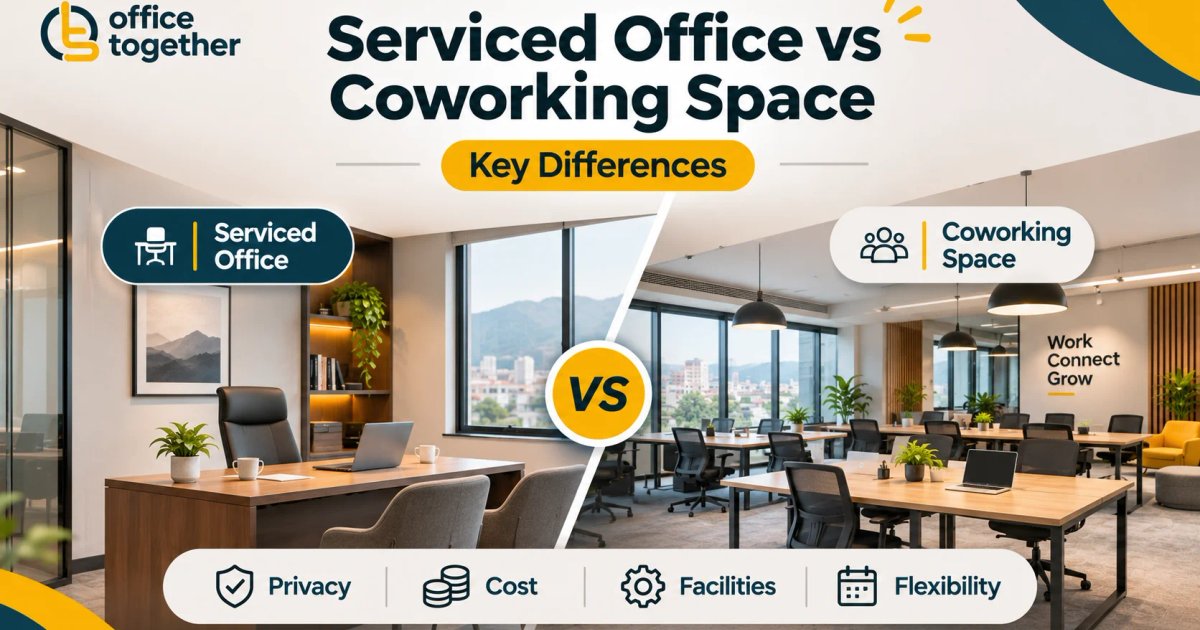
No, a serviced office and a coworking space are not necessarily the same. A serviced office usually gives you a dedicated private workspace with managed facilities, while a coworking space typically offers shared workstations used by people from different businesses. Serviced offices often suit teams that need privacy and regular collaboration, and coworking can suit freelancers and remote workers who need individual desks.
Both models can exist in the same building, though. A coworking provider may also rent private serviced offices, and businesses in serviced offices may share kitchens, meeting rooms, reception areas and other common facilities. The key differences are privacy, rental terms and the services included. For a detailed comparison, read Serviced Office vs Coworking Space: What’s the Difference?
What Should You Check Before Renting a Serviced Office?
Before you rent a serviced office, inspect the room, review its facilities and understand the rental terms. A workspace can look right in photos but have limits on seating capacity, internet, access hours or extra charges. Visiting the office and reading the agreement can help you avoid problems after you book.
Use this checklist before you confirm your serviced office rental:
Confirm the office size and seating capacity.
Inspect the available desks, chairs and furniture.
Check the internet connection and electrical facilities.
Confirm which utilities and services are included in the rent.
Ask about meeting room availability and booking charges.
Check reception, cleaning, parking and security arrangements.
Confirm office operating hours and access restrictions.
Review minimum rental periods and renewal conditions.
Understand payment, deposit and cancellation policies.
Request a written quotation covering additional charges.
A serviced office should support your daily work without adding needless costs or restrictions. Compare a few suitable workspaces and confirm the rental terms in writing to pick an office that fits your needs.
Find a Furnished Private Office with Office Together
Office Together provides furnished private workspaces in Kathmandu for startups, small businesses, consultants and teams that want flexible office arrangements. Available facilities include workstations, fast Wi-Fi, shared kitchen and bathroom facilities, reception support during operating hours, and free underground parking. Meeting rooms are also available through separate booking, so that businesses can get extra space for discussions and presentations.
Businesses can choose daily, weekly, selected day or monthly rentals based on their needs and room availability. Monthly electricity charges are billed separately, and meeting room bookings may cost extra.
Contact Office Together to discuss available private office rooms and rental arrangements.
FAQs
1. What Does a Serviced Office Mean?
A serviced office is a ready-to-use workspace with furniture and managed facilities. Businesses can rent it without arranging all the basic office services themselves.
2. How Does a Serviced Office Work?
Businesses choose an available office, review its facilities, agree on the rental terms and confirm the booking. The provider manages the agreed building services.
3. What Is Included in a Serviced Office?
Serviced offices commonly include furniture, internet access and managed facilities. Reception, cleaning, meeting rooms and utilities depend on the provider.
4. Is a Serviced Office Fully Furnished?
Most serviced offices come with essential furniture like desks and chairs. Extra equipment and facilities vary between providers.
5. How Much Does a Serviced Office Cost?
The cost depends on location, room size, facilities and rental length. Extra utility and service charges may apply.
6. Can I Rent a Serviced Office for One Day?
Yes, businesses can rent offices for one day. The available booking periods depend on availability.
7. Is Electricity Included in Serviced Office Rent?
Electricity may be included or charged separately, depending on the rental agreement. Always confirm utility charges before you book.
8. What Is the Difference Between a Serviced Office and a Coworking Space?
A serviced office usually gives you a private, managed workspace. A coworking space typically offers shared desks and common working areas.
9. Are Serviced Offices Suitable for Small Businesses?
Yes, serviced offices suit small businesses that need furnished workspaces without big setup costs. They also give access to shared facilities where available.
10. Do Serviced Offices Require a Long-Term Lease?
Not always, but some providers offer daily, weekly or monthly rentals without a conventional long-term lease.